

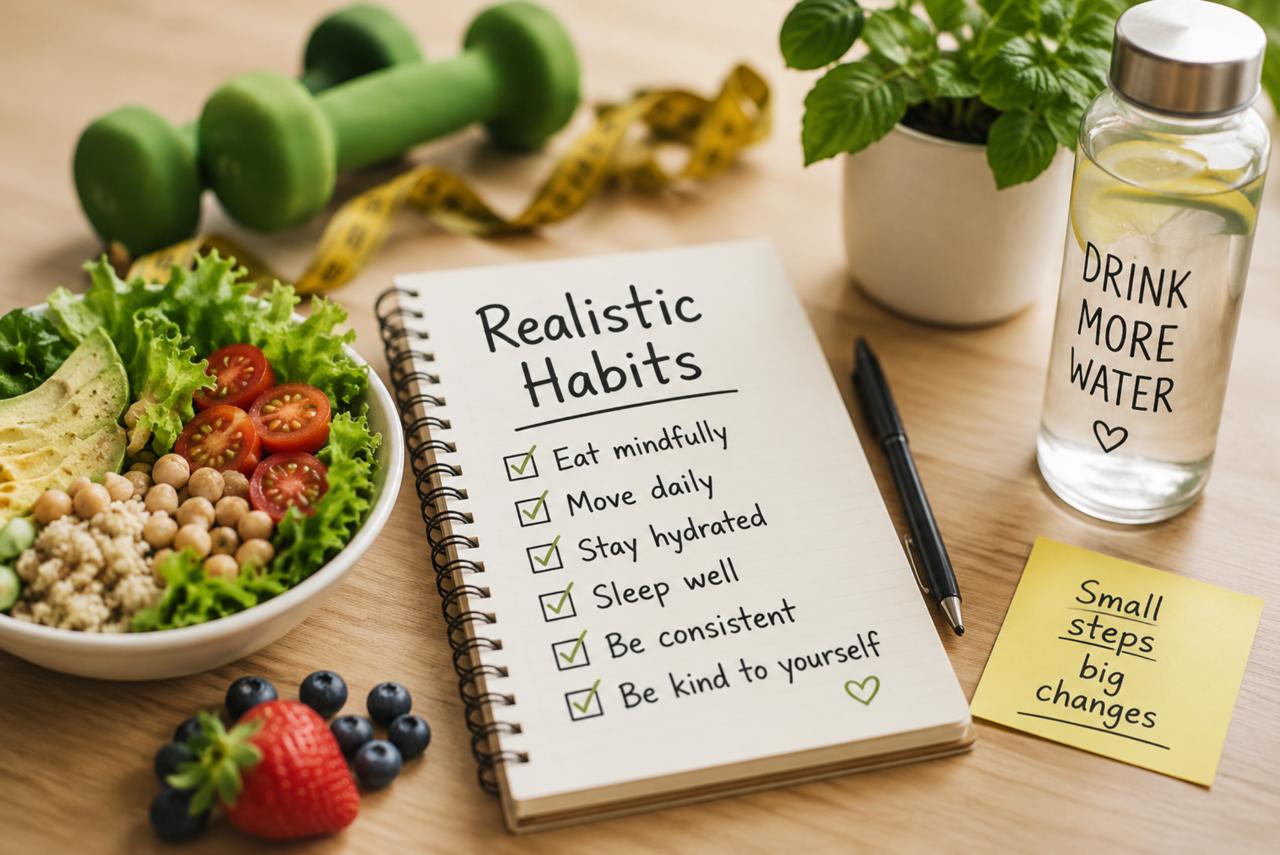
Losing weight is often seen as a difficult process. Many people believe they need a strict diet, long workout sessions, or perfect discipline to see results. Because of this, weight loss can start feeling overwhelming even before the journey begins. The internet is full of quick fixes, extreme diet plans, and transformation stories that make it seem like fast results are the only results that matter.
In reality, sustainable weight loss usually looks much simpler.
People who successfully lose weight and keep it off for years are often not doing anything extreme. They are not constantly searching for new diet plans or trying to follow impossible routines. Instead, they build small habits that fit into their daily lives and continue following them for a long time.
That is what makes sustainable weight loss different.
It is not about doing everything perfectly. It is about doing the right things consistently. The habits may seem small on their own, but over time they start influencing food choices, activity levels, sleep quality, energy, and overall health. Eventually, these small habits become part of everyday life instead of feeling like temporary rules.
The challenge is that these habits rarely attract attention. They are not exciting. They do not create overnight results. Yet they are often the reason some people maintain their progress while others keep starting over.
1. Sustainable Weight Loss Usually Starts With Realistic Habits
One reason weight loss becomes difficult is because people often try to change too many things at once. A new diet begins. A new workout plan starts. Favorite foods are removed completely. Daily routines change overnight. While this may feel motivating in the beginning, it can become difficult to maintain for weeks and months.
The body and mind usually respond better to gradual changes.
A person who starts drinking more water every day is more likely to continue that habit than someone who follows an extreme plan for a short period. The same applies to sleep, exercise, meal choices, and daily movement. Small changes may look slow at first, but they are often easier to repeat.
Interestingly, sustainable weight loss is not built during highly motivated days. It is built during ordinary days. The days when work feels busy, energy feels low, and life becomes unpredictable. Habits that survive those days are usually the ones that create long-term results.
This is why realistic habits matter so much. They reduce the need for constant motivation. Instead of relying on willpower every day, people begin following routines that feel natural and manageable. Over time, those routines start producing visible changes.
The strange part is that many successful weight loss habits do not feel powerful while they are happening. Drinking water before meals does not feel life-changing. Going for a short walk does not feel life-changing. Sleeping a little earlier does not feel life-changing.
But when these actions are repeated for months, they often create meaningful progress that lasts much longer than short-term solutions.
2. Completely Avoiding Favorite Foods Often Creates New Problems
Many people begin a weight loss journey by creating a long list of foods they are no longer allowed to eat. Pizza disappears. Burgers disappear. Desserts disappear. Even small treats start feeling forbidden.
At first, this approach can feel effective because food choices become very controlled. However, the challenge usually appears after a few weeks. Cravings do not always disappear simply because a person decides to avoid them. In many cases, the desire for certain foods becomes stronger over time.
This often creates a cycle that feels familiar to many people. A person follows strict rules for several days or weeks, eventually gives in to a craving, and then feels guilty for doing so. That guilt can sometimes lead to overeating, which creates even more frustration.
Sustainable weight loss tends to work differently.
Instead of treating food as either completely good or completely bad, it focuses on balance. Enjoying a favorite food occasionally does not automatically ruin progress. In fact, allowing room for flexibility often makes healthy eating easier to maintain in the long run.
People who maintain their weight successfully are usually not spending years avoiding every food they enjoy. They learn how to include those foods in a balanced lifestyle without feeling the need to overeat them later.
That simple shift can remove a surprising amount of pressure from the weight loss process.
3. Eating Slowly Helps More Than People Realize
Modern life encourages speed. People work while eating, scroll through their phones during meals, or finish lunch in just a few minutes before returning to their responsibilities. Over time, eating quickly can become a normal habit.
The problem is that the body needs time to recognize fullness.
When meals are eaten too quickly, it becomes easier to consume more food before the brain receives signals that enough has already been eaten. This is one reason many people feel unexpectedly full after finishing a meal. The body needed more time to catch up.
Eating slowly creates a different experience. It allows people to pay more attention to hunger levels, enjoy food more, and naturally recognize when they are satisfied. No complicated diet is required. No special meal plan is needed.
It is a simple habit that helps people become more aware of what their body is telling them.
Interestingly, this habit often improves the relationship people have with food. Meals feel less rushed and more satisfying, which can reduce the constant urge to keep eating after the body has already had enough.
4. Water Often Influences Appetite More Than Expected
When people think about weight loss, they usually focus on food. Water rarely receives the same attention. Yet hydration plays a surprisingly important role in daily eating habits.
Sometimes feelings of hunger and dehydration can feel very similar. A person may believe they need food when their body is actually asking for more fluids. This does not happen every time, but it happens often enough to influence eating behavior.
Drinking water before meals can also help people become more mindful about how much they eat. It creates a brief pause before eating begins and can make meals feel more satisfying.
The benefit is not that water magically causes weight loss. The benefit is that proper hydration supports better daily decisions. Energy levels often improve. Digestion may feel better. Cravings can become easier to manage.
These effects may seem small individually, but sustainable weight loss is usually built through many small improvements working together.
5. Sleep Quietly Affects Weight Loss Every Day
Sleep is often treated as a separate health topic, but it has a strong connection to weight management. Many people focus on workouts and nutrition while completely overlooking recovery.
Poor sleep affects more than energy levels.
It can influence cravings, appetite, decision-making, mood, and motivation. After a night of poor sleep, healthy choices often feel harder to maintain. Sugary foods become more appealing. Portion control becomes more difficult. Even simple tasks can feel more demanding.
This is one reason weight loss sometimes feels harder during stressful periods of life. The issue is not always a lack of effort. Sometimes recovery quality has quietly declined.
People are often surprised by how much better their routines feel after improving sleep habits. Workouts become easier to complete. Hunger feels more manageable. Daily energy improves. Healthy decisions require less effort.
Sleep may not be the first thing people think about when discussing sustainable weight loss, but it often plays a larger role than expected.
6. Sustainable Weight Loss Is Easier When Progress Is Not Measured Every Day
Many people make the mistake of treating the weighing scale as a daily report card. They step on it every morning hoping to see immediate progress. When the number drops, they feel encouraged. When it stays the same or moves up slightly, frustration quickly appears.
The problem is that body weight naturally changes from day to day. Factors such as water intake, meal timing, sleep quality, stress, and physical activity can all influence the number on the scale. These short-term changes do not always reflect actual fat loss, yet they often affect motivation more than they should.
Sustainable weight loss becomes easier when people stop focusing on daily fluctuations and start paying attention to long-term patterns. Healthy habits often improve before visible results appear. Better food choices, improved sleep, more movement, and consistent routines are all signs of progress, even when the scale has not changed much yet.
People who maintain weight loss successfully usually understand this. They focus less on daily numbers and more on the habits that create results over time. This approach reduces pressure and helps them stay consistent for longer.
7. Everyday Movement Matters More Than Most People Think

When people think about weight loss, they often focus on gym workouts. While exercise is important, it is only one part of the picture. The body spends far more time outside the gym than inside it.
Simple activities throughout the day can have a surprisingly large impact over time. Walking after meals, taking the stairs, standing more often, doing household tasks, or simply staying active throughout the day all contribute to overall energy expenditure. These activities may not feel like exercise, but they help create a more active lifestyle.
One reason sustainable weight loss feels achievable for some people is because they do not depend entirely on intense workouts. Instead, they find ways to move more naturally during their daily routine. This makes physical activity feel less like a task and more like a normal part of life.
Interestingly, these small movements are often easier to maintain than demanding workout schedules. A short walk can fit into most days. Staying active during daily activities requires less planning. Over months and years, these simple habits can make a meaningful difference.
8. The Habit That Connects Everything: Getting Back On Track
Every weight loss journey includes imperfect days. There will be celebrations, holidays, busy work schedules, and moments when healthy routines do not go as planned. This is completely normal.
What often separates sustainable weight loss from temporary weight loss is not avoiding mistakes. It is how people respond after those mistakes happen.
Many people assume that one unhealthy meal has ruined their progress. Others miss a workout and feel like they have failed. Once this mindset takes over, it becomes easy to abandon healthy habits altogether.
People who maintain their results for years usually take a different approach. They understand that one meal, one day, or even one weekend does not determine long-term success. Instead of starting over, they simply return to their routine as soon as possible.
This habit may sound simple, but it is one of the most powerful habits behind sustainable weight loss. Progress is rarely created by perfection. It is created by repeatedly returning to healthy behaviors, even after setbacks.
The hidden habits behind sustainable weight loss are often the simplest ones. They do not rely on extreme diets, strict rules, or unrealistic routines. Instead, they focus on actions that can be repeated consistently over a long period of time.
Eating mindfully, staying hydrated, getting enough sleep, moving regularly, allowing flexibility around food, and learning how to recover from setbacks all play an important role. None of these habits seem dramatic on their own, but together they create a lifestyle that supports long-term progress.
That is what makes sustainable weight loss different. It is not built on short bursts of motivation. It is built on habits that continue working even when life becomes busy, stressful, or unpredictable.
The goal is not to create a perfect routine. The goal is to create a realistic one. When healthy habits become part of everyday life, weight loss stops feeling like a temporary project and starts becoming something that can actually last.
Also Read: Kettlebells vs Dumbbells: Which One Is Better for Strength, Fat Loss, and Muscle Growth?