


Have you ever finished 20 push-ups and felt the burn everywhere except your chest? Your shoulders feel tired. Your arms give up. Sometimes even your neck hurts. But your chest—the muscle you actually wanted to train—hardly feels anything. If this sounds familiar, you’re not alone. Thousands of people search for ways to feel push-ups in chest because they believe they need stronger muscles. The truth is surprising: in most cases, the problem isn’t strength. It’s technique.
A small mistake in your elbow position, hand placement, or body alignment can completely change which muscles do the work. That’s why one person builds an impressive chest with push-ups while another keeps repeating hundreds of reps with very little progress.
In this guide, you’ll discover the 7 hidden mistakes that stop you from feeling push-ups in your chest. More importantly, you’ll learn simple fixes that work whether you train at home or in the gym.
1. Why Don’t You Feel Push-ups in Chest?
Before fixing your push-up, let’s answer one important question: which muscle should actually work?
A proper push-up is mainly a chest exercise. Your shoulders, triceps, and core help you perform the movement, but your chest should produce most of the pushing power. When people fail to feel push-ups in chest, another muscle usually takes over. The shoulders are the most common culprit because they naturally try to help whenever your body loses good positioning.
Imagine pushing a heavy door. You wouldn’t twist your shoulders forward and hope for the best—you’d place your hands correctly, keep your body stable, and drive the door with your upper body. Push-ups work the same way. Good position allows the chest to work. Poor position forces smaller muscles to compensate.
The good news is that you don’t need expensive equipment or superhuman strength. Most people start feeling their chest within a few workouts simply by correcting the mistakes you’ll learn next. Sometimes better push-ups are far more powerful than more push-ups.
2. Hidden Mistake #1: Your Elbows Are Doing All the Work

If you don’t feel push-ups in chest, check your elbows before anything else. This is the biggest mistake beginners make. Many people flare their elbows almost 90 degrees away from the body because it feels easier. Unfortunately, that position shifts much of the work to the shoulders and puts extra stress on the shoulder joint.
A better position is to keep your elbows at about 45 degrees from your body. Think of making an arrow shape instead of a straight T shape. As you lower yourself, your elbows should travel slightly backward, not directly out to the sides. This simple adjustment helps your chest muscles produce more of the pushing force while keeping your shoulders in a safer position.
Don’t worry if this feels awkward at first. Your body has probably repeated the wrong pattern hundreds of times. Practice 8–10 slow push-ups with the new elbow position instead of chasing high repetitions. Most people notice they finally feel push-ups in chest much more clearly after this one correction alone.
3. Hidden Mistake #2: You’re Pushing From Your Shoulders
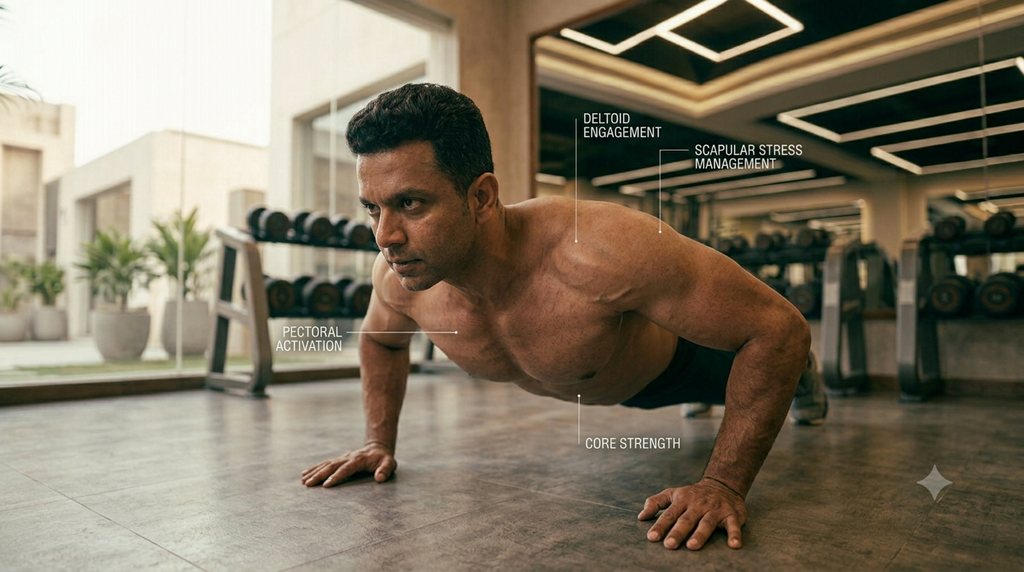
Many people begin a push-up by pushing their shoulders forward. That movement makes the shoulders dominate the exercise while the chest stays surprisingly quiet. If you constantly feel push-ups in chest only a little, this mistake may be the reason.
Before every repetition, gently pull your shoulders down and back. Don’t squeeze them hard—just create a stable upper body. Then imagine bringing your chest toward the floor instead of dropping your face. This small mental cue immediately improves chest activation because your body starts moving through the correct pattern.
A simple test works wonders. Perform five push-ups the way you normally do, rest for 30 seconds, then perform five more while focusing only on keeping your shoulders stable. The difference is often obvious. You’ll usually feel less shoulder fatigue and much better chest engagement.
4. Hidden Mistake #3: Your Hands Are Too Wide or Too Narrow
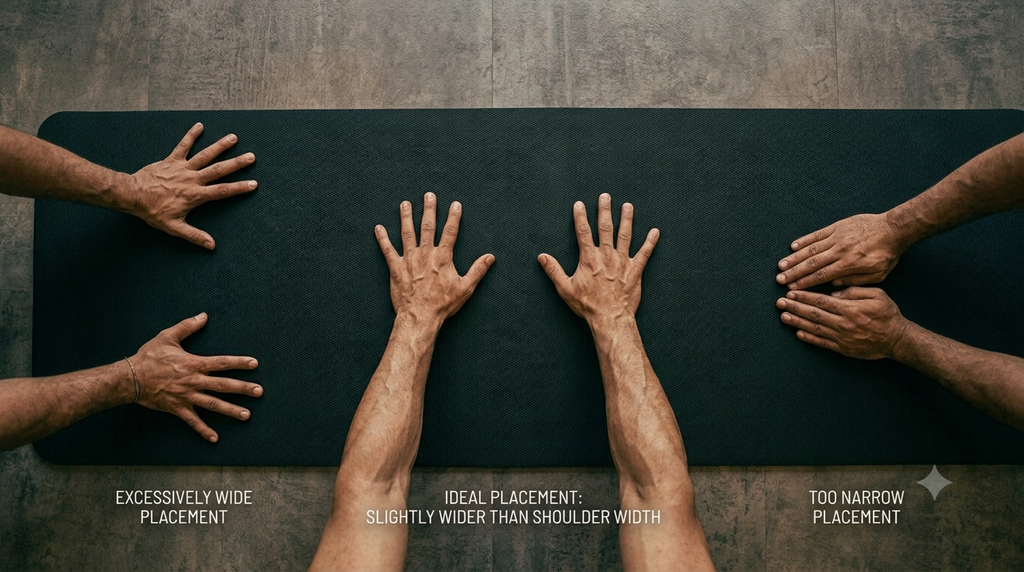
Hand placement changes the entire exercise. Many people believe that placing the hands extremely wide will build a bigger chest, while others keep them too close together because it feels stronger. Both extremes reduce the quality of the movement.
For most people, the ideal position is slightly wider than shoulder width. Your wrists should sit comfortably below your shoulders, and your fingers should point mostly forward. This creates a balanced position where the chest, shoulders, and triceps work together instead of letting one muscle dominate.
Instead of copying someone else’s hand placement, let your own body guide you. If your wrists feel uncomfortable or your shoulders feel overloaded, adjust your hands slightly until the movement feels smooth. Sometimes moving your hands just two or three centimeters makes a noticeable difference in how you feel push-ups in chest.
5. Hidden Mistake #4: Your Body Isn’t a Straight Line
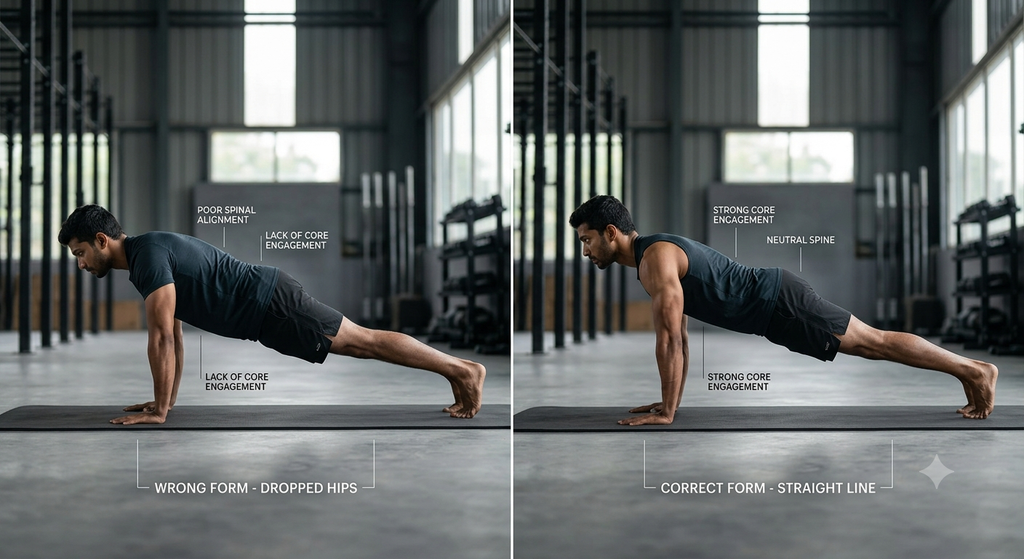
A push-up is not only an upper-body exercise, it’s a full-body movement. If your hips drop or rise too high, your chest loses stability and the movement becomes inefficient. That’s why some people can perform 30 push-ups but still struggle to build real upper-body strength.
Imagine your body as one straight plank from your head to your heels. Tighten your core, squeeze your glut’s lightly, and keep your neck neutral. You don’t need to stare forward; looking slightly down helps maintain better alignment. This single habit allows your chest to work against a stable body instead of compensating for poor posture.
The next time you record yourself doing push-ups, don’t watch your arms first. Watch your hips. You’ll often discover that body alignment—not arm strength—is the hidden reason you don’t feel push-ups in chest.
6. Hidden Mistake #5: You Rush Every Rep
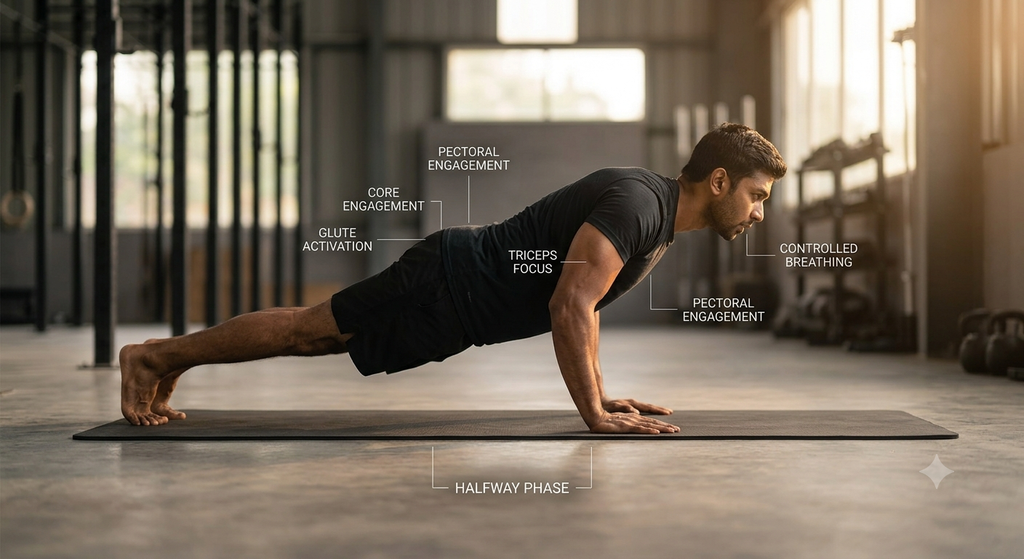
Speed is one of the biggest enemies of muscle activation. Many people perform push-ups like cardio: down, up, down, up as fast as possible. Fast repetitions burn calories, but they don’t always help you develop better chest engagement.
Slow your movement down. Take 2–3 seconds to lower your body, pause for a brief moment just above the floor, and push back up with control. That extra time increases the amount of work your chest performs during each repetition. You’ll probably complete fewer reps, but the quality of every rep becomes much higher.
This principle applies to almost every exercise in fitness. Controlled movement usually produces better long-term results than rushing through repetitions. In fact, the same idea appears in many sustainable training habits we discuss in our article on The Hidden Habits Behind Sustainable Weight Loss
7. Hidden Mistakes #6 & #7 + 30-Second Chest Activation Checklist
The last two mistakes are surprisingly simple: holding your breath and never checking your form. Many beginners unknowingly stop breathing during difficult repetitions. Instead, inhale as you lower yourself and exhale as you push away from the floor. Proper breathing improves stability and helps you maintain better control throughout the movement.
Before every workout, use this 30-second checklist:
- Elbows at about 45°
- Hands slightly wider than shoulders
- Shoulders down and stable
- Body in one straight line
- Slow, controlled repetitions
- Exhale while pushing up
If you follow this checklist consistently, you’ll start to feel push-ups in chest instead of wondering why your shoulders always burn first.
For readers who train at home, a Push-up Board with Resistance Bands can also help create consistent hand placement and add exercise variety. Treat it as a helpful training tool, not a shortcut. Good technique will always matter more than equipment.
For additional guidance on proper push-up mechanics and exercise technique, the American Council on Exercise (ACE) also provides reliable exercise education
Better Push-ups Beat More Push-ups
Most people don’t fail at push-ups because they’re weak. They fail because they repeat the wrong movement pattern over and over again. The goal isn’t to perform 100 push-ups with poor form. The goal is to make every repetition count.
If you remember only one lesson from this article, let it be this: quality beats quantity. Correct your elbow position, stabilize your shoulders, choose the right hand placement, keep your body aligned, and slow every repetition down. These small adjustments can completely change how you feel push-ups in chest.
The next time you drop to the floor, don’t ask yourself, “How many can I do?” Ask yourself, “Can I make my chest do the work?” That’s the question that leads to stronger, smarter, and more effective push-ups.